
The murderers are among us

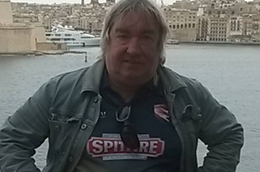
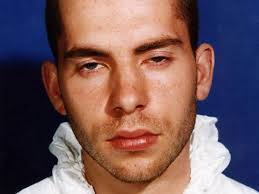
Leonard Veenendaal after leaving South Africa

Official interest in Namibia in an infamous apartheid killer at large in Britain is beginning to gather pace, report Dave Williams and Klaus Maler.

The Namibian Prosecutor-General Martha Imalwa has told Searchlight that the Namibian authorities will look again at the case files of the apartheid killer Leonard Michael Veenendaal to establish “if we should have the evidence” to make a formal case for extradition.

Until now the Namibian authorities have been reluctant formally to request Veenendaal’s extradition from the UK unless they can be reasonably certain of securing a conviction. Another reason for inaction has been petty administrative hurdles such as the fact that the original docket, which is needed for the prosecution to proceed, is in Afrikaans and has lain untranslated for over 17 years.

During the course of our interview Imalwa told Searchlight that there had been some movement on the case from the British side. Towards the end of 2007 the British authorities made an “internal” enquiry to their Namibian counterparts to find out whether the Namibian government was still interested in pursuing Veenendaal’s extradition.

That the bureaucratic wheels are finally turning appears to be the result of enquiries made both by Searchlight and, with increasing vigour, by the Namibian Sun and the influential Insight Magazine, both of which have carried articles on Veenendaal asking pointedly why he has not been extradited.

Utoni Nujoma, the deputy Minister of Justice, was more forthright, telling Namibian journalists that his ministry would “vigorously pursue the issue” of bringing Veenendaal to justice. “The families of the victims of these terrorist activities want to see justice,” Nujoma said.

Following several decades of guerrilla war between the South West African People’s Organisation (SWAPO) and the forces of the apartheid state, South Africa finally agreed to relinquish its administration of South West Africa, as Namibia was called until 1990. Instead it switched to a murderous campaign of destabilisation aimed at disrupting the country’s first “free and fair” elections in November 1989 that were taking place under the supervision of the United Nations Transition Assistance Group (UNTAG) and were to lead to the country’s independence the following year.

The South African Defence Forces had other ideas. They embarked upon a concerted and well-funded covert disinformation campaign aimed at derailing SWAPO, disrupting its election meetings and feeding false information to the media.

Agitating for murder, a leaflet of the South African Army’s Comops (Communication Operations) unit

Money was channelled to a number of paramilitary groups including Aksie Kontra 435, which was formed in Keetmanshoop under the leadership of Louis van der Westhuizen in 1988. The group recruited heavily among members of the white supremacist South African Afrikaner Resistance Movement (AWB), which had an office in Windhoek, the Namibian capital. Veenendaal was a committed member of the AWB and a personal bodyguard to its leader Eugene Terre’Blanche, who described Veenendaal as “my little fanatic” because of his propensity for violence.

Members of Aksie Kontra 435 and the AWB waged an illegal and violent campaign aimed at forcing UNTAG out of Namibia and rendering the general election impossible. In line with this objective three Aksie Kontra 435 members – Leonard Veenendaal, Darryl Stopforth and the German neo-nazi Horst Klenz – carried out a grenade attack on an UNTAG regional office at Outjo in South West Africa on 10 August 1989, during which the building was “substantially” damaged and David Hoaseb, a security guard, was killed.

The three men were arrested and held in Windhoek. During their subsequent arraignment at Outjo Magistrates court on 4 December 1989 an accomplice hid a pistol in a toilet cistern. Veenendaal asked to go to the toilet, retrieved the gun and concealed it on himself. As the prisoners were being transported back to custody, two white men attacked the vehicle after it had stopped to allow the prisoners to relieve themselves. During the ensuing struggle Ricardo van Wyk, a police officer, was shot and killed.

The two men who facilitated Veenendaal’s escape from custody were Nicolaas “Cliffie” Barnard and Henk Bredenhann, both members of the AWB “Iron Guard”. Barnard was one of the AWB’s most active terrorists, responsible for the bombing of the Worcester shopping centre on Christmas Eve 1996, which killed four black shoppers and injured 60.

Veenendaal returned to South Africa where he remained politically active in support of his racist cause, undeterred by an application for his extradition to Namibia in June 1990. Although the South African authorities arrested him, their Namibian counterparts were unable to interrogate him about his involvement in the murderous campaign to undermine SWAPO and he was released.

The following month Johannesburg was rocked by a wave of nazi terrorism conducted principally by the Orde Boerevolk, a terrorist group led by Bredenhann’s father. Veenendaal and Stopforth were among a number of AWB members rounded up. They appeared in court two months later but escaped justice. One can only assume that their case was lost in the last turbulent days of the apartheid regime.

The following year a bomb went off at the offices of the Vrye Weekblad, an anti-apartheid weekly that delighted in published the confessions of defectors from the South African death squads. A security officer later told journalists that “a certain Leonard Veenendaal” had confessed to the bombing “after being ever so slightly tortured”.

Veenendaal and Stopforth eventually appeared in court in Johannesburg in April 1992 and were found extraditable. They promptly went on hunger strike and were granted bail in November that year. Free again Veenendaal turned to more orthodox channels through which to pursue his racist politics and was elected as a Conservative councillor in Newcastle, KwaZulu-Natal. Shortly before South Africa’s first free elections Veenendaal is believed to have been acting as a military trainer for Buthelezi’s Inkatha troops preparing the civil war.

In 1996 the Minister of Justice approved finally the extradition of Veenendaal and Stopforth. Both men promptly applied to the Supreme Court asking for a delay in their removal to face justice until South Africa’s Truth and Reconciliation Committee (TRC), which was charged with investigating the crimes of the apartheid era, had heard their plea for amnesty. The TRC eventually rejected his request on the grounds that it could not pardon crimes that had been committed in another country. It hardly mattered. By that time he and Stopforth were long gone. Klenz languished in prison though later succeeded in returning to Germany where he lives today.

Youngsters for Swapo on the eve of Namibia’s first free election in November 1989

Veenendaal arrived at Heathrow Airport, London, in 1997 on a passport acquired from a friend. When challenged, he immediately claimed asylum. His family joined him a year later. Today Veenendaal lives in Wisbech, Cambridgeshire, and works as a senior technical services manager for Cambridge County Council’s Education ICT department. Quite why the British authorities, and more to the point a Labour government, have allowed a man involved in a terrorist campaign that resulted in two murders to reside in England remains a mystery.

Cambridgeshire County Council’s press officer Tony Taylorson told Insight: “Cambridgeshire County Council’s human resources department is satisfied that Leonard Veenendaal is able to work in the UK having gone through thorough checks via the immigration service in the UK, South Africa and Namibia”. Asked about his current status Taylorson said that Veenendaal had acquired UK residency.

Surveying the nefarious activities of the apartheid regime, the TRC concluded that the South African state had committed “gross violations of human rights on a vast scale” between 1966 and 1989. Given that Veenendaal played a leading role in what the TRC went on to describe as “a systematic pattern of abuse”, one has to wonder why for the past decade neither the UK nor Namibia has shown the necessary political will to bring to justice one of the apartheid era’s most violent fugitives, Leonard Michael Veenendaal.


Anton Lubowski
Anton Lubowski

The assassination of Anton Lubowski

The use of neo-nazi thugs such as Leonard Veenendaal to destabilise South West Africa, now Namibia, ran in tandem with the establishment of a covert military structure called the Civil Cooperation Bureau (CCB), which specialised in covert assassination and the murder of political opponents of the apartheid regime.

One of the greatest “successes” of this death squad was the murder of Anton Lubowski (pictured), the secretary general of the South West African People’s Organisation (SWAPO) and its most senior white member, who was shot dead outside his home in the Namibian capital of Windhoek on 12 September 1989.

The names of those responsible for Lubowski’s execution have been well known since 1990 although they escaped justice. Now, however, pressure to reopen the case is growing following complaints from a journalist that important evidence was not presented at Lubowski’s inquest. As a result the Namibian Prosecutor-General, Martha Imalwa, has promised to review the case.

This news is welcome. Hopefully it will also prompt a closer enquiry into the violent subversive activities of the South African apartheid regime’s CCB whose disinformation campaigns, dummy firms, sabotage, breakdowns, bomb attacks, poisoning of drinking water in neighbouring countries and murders were all part of its formidable repertoire of terror.

The CCB was formed in 1986 as a clandestine instrument of the South African armed forces to wage war against those opposed to apartheid in neighbouring countries. Before it was wound up the CCB had nine regional structures as well as operational cadres in Europe (including Britain), who were responsible for the murder of the ANC activist Dulcie September, gunned down in her Paris office.

The CCB were not alone in their murderous work. Composed of criminals and fraudsters, usually drawn from the ranks of serving and former policemen and members of the military, the death squads had the power over human life at their disposal together with huge sums of cash and a more or less fireproof guarantee of exemption from punishment. By the time president F W de Klerk attempted a cautious liberalisation of South African society from 1989 onwards, the CCB death squads, and others, were operating almost completely autonomously.

During the final phase of apartheid, the state apparatus was far from united or homogenous. Parts of the police and military laboured to prevent the step-by-step dismantling of apartheid. A so-called “third force” emerged in many places to carry out assassination attempts and massacres and to bring the conflict in KwaZulu between Buthelezi and the ANC, which cost the lives of thousands, to boiling point. With civil war looming, their working hypothesis was to bring closer a seizure of power by the military.

None of the leading figures in the apartheid regime who sanctioned these extra-judicial killings – the generals, secretaries of defence and high-ranking politicians in the state’s Security Council – ever faced justice. Those who were punished were the small fry, the hired goons and trigger pullers, those who did the “dirty work”. An archetypal example was Ferdi Barnard, a combination of professional hitman and gangster who went on to make a career of crime as apartheid neared its end, without realising that the general protection of the law was no longer available to him.

In the run-up to the Namibian election of November 1989, Colonel Christoffel Nel, the CCB intelligence chief, ordered his units throughout Africa and indeed Europe to “do something” in Namibia against the United Nations Transition Assistance Group (UNTAG) which would paralyse SWAPO and ruin its electoral chances. The decision to engage the CCB in Namibia was taken at the highest level by its “managing director”, Commander Joe Verster.

Much of what subsequently came to light about the CCB did so as a result of a falling out between Commander Verster and Petrus Botes, the CCB Region 2 director (whose remit covered Mozambique and Swaziland). When the military leadership ignored his concerns about CCB activities, Botes took his story to the anti-apartheid weekly Vyre Weekblad though not before a bomb went off in his office as a warning to keep quiet.

Botes’s testimony revealed that before the election, which was destined to terminate South Africa’s illegal occupation of Namibia, the CCB leadership had directed its “operation teams” from Region 2 and Region 6 (internal South Africa) under Daniel “Staal” Burger to Namibia to destabilise the country together with its existing unit there under the command of Rolf Westhuizen. Botes’s team was given the task of murdering the prominent SWAPO functionaries Hidipo Hamentuya and Danny Tsjongerero, planting bombs at SWAPO meetings and lobbing hand-grenades into crowds.

The CCB also developed plans to infect drinking water at SWAPO camps in northern Namibia with cholera bacteria and yellow fever viruses. As well as waging biological warfare, the CCB accumulated large stockpiles of weapons and explosives, including a rocket launcher, that were channelled to the killer gangs.

When Botes and Verster quarrelled, the activities of CCB Region 2 were suspended and with it the plan to murder Hamentuya, which had entered its final phase. This was Lubwoski’s death sentence. When the plan to kill Hamentuya was aborted a new target was chosen: Anton Lubowski, the white SWAPO member whom the racists hated with a passion.

On 1 May 1989 another anti-apartheid activist, David Webster, was shot dead outside his home. Lubowski’s murder four months later was almost a carbon copy. Webster was murdered by Barnard, a CCB operative and drug-dependent gangster. Before his trial in 1996 several potential prosecution witnesses died in “accidents” or were murdered. Barnard was eventually convicted of the killing as well as another murder, an attempted murder and 22 further offences. He received two life sentences plus 63 years for a range of crimes committed at the behest of the apartheid state.

Barnard appeared before the TRC in 1998 and named Calla Botha as his accomplice in Webster’s murder and Commander Verster as the man who gave the order. Barnard also accused the CCB of responsibility for Lubowski’s murder. Twice, Barnard told the former Vrye Weekblad journalist Jacques Pauw, he had lain in wait for Lubowski, armed with an AK-47, but could not get a clear shot. His CCB colleagues then flew to Windhoek to finish the job.

The CCB “internal team” tasked with assassinating Lubowski consisted of Botha, Abram “Slang” van Zyl, Barnard, Eugene Riley and Chappies Maree. It was led by Burger. Attached to this outfit was the Irish murderer Donald “Dolan” Acheson.

The decision to murder Lubowski was taken at a CCB meeting at the Rose Bank hotel in Johannesburg on 1 September 1989, Burger and Maree playing a key role. Following the decision, van Zyl was dispatched to Windhoek, to put Lubowski under close surveillance.

On the morning of the murder, Burger flew to Windhoek under the name “Gagiano”, returning the next day. Acheson, who also received an order to poison the journalist Gwen Lister, had flown to Windhoek two days earlier. In Windhoek, Acheson, Burger and Maree met up.

Lubowski’s funeral service, 30 September 1989. Front row, second from left: Michaela Clayton, human rights lawyer and Lubowski’s partner. Continuing to the right: Swapo President Sam Nujoma and the Lubowski family

On the evening of 12 September, Lubowski’s neighbours heard gunshots, which they at first thought were fireworks. Lubowski was shot nine times with an AK-47 from a passing car, later identified as a red Toyota Conquest, which Acheson had rented for the job. Acheson was arrested and imprisoned for eight months only to be released for lack of evidence, an act described by the inquest judge as the “height of incompetence” given the “strong prima facie evidence” against him.

When Acheson was arrested the police investigator discovered a piece of paper with a pager number scrawled on it. This number led the police to Acheson’s handlers: Botha, Barnard and Maree. Barnard and Botha, who were arrested as a result of this damning piece of evidence, revealed the existence of the CCB after some weeks of solitary confinement. It was only in the third judicial investigation in Namibia in June 1994, however, that Acheson was named as the marksman.

The judge concluded that Acheson had killed Lubowski on the orders of the CCB and that his accomplices included Verster, Burger, Barnard, Maree, van Zyl, Botha, Wouter Basson, Johan Niemoeller and Charles Neelse.

Despite his apparent guilt, no effort was made to extradite Acheson to Namibia. In April 1991 he was deported from South Africa to the UK as an undesirable alien, having no resident’s permit. He claimed to be afraid for his life, fearing that he would be made a scapegoat for the CCB. Soon afterwards all trace of him vanished. Perhaps the long arm of the then still active CCB caught up with him, perhaps not.

© Searchlight Magazine 2008

<< back | > top <